
How To Use A Potato Bin
* For the earliest and latest potatoes,
* For cleaner potatoes,
* For growing on small spaces & hard surfaces.
Potato bins, spud grow bags and raised beds are used to grow prize winning potatoes for the garden show bench. They provide the earliest new potatoes.
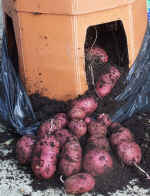
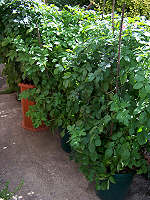
Wrap around potato tubs, potato barrels, and bags, all fit coveniently and neatly on hard surfaces that are open to full light. Try them on your patio, in your back yard, or even on a balcony. They give you a convenient way to harvest your own fresh spuds.
Below you'll discover how you can grow the earliest potatoes for summer salads as well as freshly picked 'new' potatoes to roast and eat for Christmas dinner.
Potato Bins Provide Advantages To Organic Gardeners
- Isolate your potato plants from some garden pests e.g. slugs,
- Grow early varieties to get a crop before the seasonal blight infection,
- Give your garden soil a rest from potato growing while you still enjoy fresh home grown potatoes from your tubs,
- Grow a cleaner crop by using specially prepared compost,
- Grow a respectable crop on small hard surfaces - patio, paved yard...
- Grow the earliest potatoes from containers started in the greenhouse and brought out after last frost,
- Grow potatoes for longer in the fall and harvest them fresh for Christmas.


Specially designed barrels & fabrics do even better >> because they stimulate root growth and nutrient uptake... ...
Compare potato bins, potato growing bags, large tubs and large clay pots
Find out more below... VVV
How to Grow the Earliest Potatoes
- Buy 'First Early' seed potatoes - 'Swift' and 'Rocket' (U.K.) are the fastest to produce - but 'Nicola' is perhaps the nicest to eat. A compact growing variety is best.
- Begin chitting them in late December early January, see links below on how to chit potatoes.
-
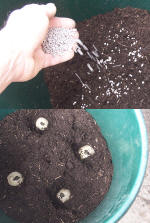
Mix your potato fertilizer into a good moisture holding organic compost about 3 weeks before planting and cover, (I use a separate container for this),
or
get a few bags of potato growing compost available from the links below.
Two Potato Varieties
Cropped From One
Large Potato Tub
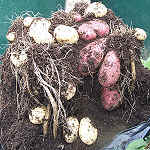
- You can leave your potato bins or bags in a conservatory or cold greenhouse. They'll be growing before garden potatoes are planted outside.
- When the frosts are over the tubs get moved outside - before they are too full and heavy.
-
Results:- You'll get the first new potatoes of the season in early summer. And a clean crop suitable for the show bench.
See below to get new potatoes at Christmas...
Note:- you can mix proprietary compost with your own made garden compost to make it go further and better.
To find suitable potato bins, tubs and growing bags, potato growing compost, and fertilizer, follow these links.
Types of Potato Bins, Bags, Containers...
My Trial and Error...
Nowadays organic potato growing compost is readily available for gardeners and much lighter than soil.
Some gardeners reckon that plastic prevents sufficient air getting to the roots. Most potato grow bags are made of porous woven material and now I avoid using ordinary plastic sheet bags even if they claim to be potato bags.
I avoid clay pots not least because they are heavy and fragile.
But I don't find any problems using good light compost in these Giant sized potato buckets. They have drainage holes an inch or so from the bottom. They can also be used for growing other vegetables such as carrots, lettuce, and broccoli.
Giant sized potato buckets are tough and long lasting. When I'm not using them they easily stack inside each other.
The Airpot Potato Towers on this link have an advanced design similar to root trainers. They air prune roots of potato plants to increase root volume, nutrient uptake and crop yield.
All wrap around potato bins are a nice innovation for patios that give quick access to your new potatoes. See below...
I don't advise making potato containers from car tyres as they are not easy to handle, occupy excessive ground space, a pool of water collects inside, and the hollow shape requires additional filling. They may add toxic compounds to the potato soil.
POTATOES
IN DEPTH
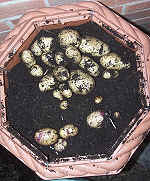
Uncovering the top
of my 2009 potato barrel crop.
of my 2009 potato barrel crop.
My first specialised potato bin was the 80 Litre Potato Growing Barrel. It's made of a flexible corrugated material with stiff sides that fold flat when not in use. The sides pull up to give direct access to the potatoes growing near the bottom. It looks attractive on the patio but a little harder to move around.
See my potato barrel with crop & potato tubs >>
MOST IMPORTANT: give your potatoes a moisture holding compost and keep them well-watered and regularly fed with high potash potato or tomato liquid feeds as they are growing.
Suitable Containers For Growing Potatoes.
Click flag to jump to your country selection: >>-
Organic Grown Potato Tubers, along with
Potato Growing Kits and Grow Bags
are on this link for you.
- You can also get raised bed kits, growing compost and fertilizer from the same supplier.
- Click here to select potato varieties to grow at home.
- Potato bins, barrels & planters including the Giant Potato Tubs and more useful resources to help you enjoy home grown.
- Alternatively products mentioned above to be relocated here soon... ...
- Click here to select potato varieties to grow at home.
Preparing Containers And Planting Up
|
-
Fill your potato bins or potato growing bags to about 4-5 inches deep with your compost.
Place them in a frost free place - greenhouse, polytunnel or conservatory - but not over 10oC, - Your seed potatoes are ready for planting when they have robust 1 inch long shoots - no more than 3 per tuber,
- Press the chitted seed potatoes (shoots uppermost) into the compost in your potato bins. Use about 4 or 5 tubers per container from compact potato varieties. Large (10inch) plant pot sized containers may grow one potato plant each,
- Watering with liquid seaweed helps - cover potato shoot tip with 1 inch of compost,
- As the potato shoots emerge keep adding your enriched compost so no more than a few inches of shoot remains exposed,
-
You'll need to move the potato bins into their final position before they get too heavy,
It is important not to leave them in too warm a situation as this turns potato tubers into leaves,
A polytunnel may be a productive situation early in the season, but it is important to have cool night temperatures,
If your potato bins are outside from day one, a fleece cover will protect the plants from frost when likely,
- Now it's important to keep the compost in potato bins adequately watered, especially in dry spells - check them regularly (indeed every day).
-
Also, regularly water with potassium rich potato feeds, such as liquid seaweed, tomato fertilizer...
- Your potato plants may need staking up to support them if you didn't choose a compact growing variety.
- By using rich compost, liquid feeds and adequate watering you can produce prize winning potato tubers unscathed by pests and disease.

Fresh Home Grown Potatoes for Christmas
- Potato varieties grown for late potatoes are in fact 'early' varieties because they can produce a crop in 3 months - i.e. from August to the end of November,
-
You may find it convenient to buy a few extra tubers of an 'early' variety, hold them back in a cool dry place, and chit them after your late maincrop varieties for planting in August,
But specially prepared late potatoes are available to buy from summer.
- Planting is done during August - early September. Don't delay, they need enough growing time before sun down,
-
Space freed up in potato grow bags and potato tubs after July's harvest of 'first earlies' is normally used for planting this late crop,
- Now you will bring your tubs and containers into a cool greenhouse or conservatory so you can extend the growing season to get more or bigger potatoes,
- When the leaves die down you can cut the haulms away for composting. Your potatoes will store nicely in the container compost even outside until you need them.
SUMMARY:
Start them inside and bring them outside when the frosty nights have finished and vice versa in the autumn to prolong the growing season. Even small 12inch containers will fill-up small gaps in your potato crop.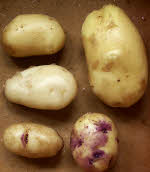
But for the smaller cropping early potatoes the flexibility of the potato bags, tubs and bins, is outstanding.
MOST IMPORTANT: give your potatoes a moisture holding compost and keep them well-watered and regularly fed with high potash potato or tomato liquid feeds as they are growing.
Find Suitable Containers
|
|
| Click flag to jump to your country selection: >> | |
-
Potato barrels & planters including the
Giant Potato Tubs and more useful resources to help you enjoy home grown.
-
Alternatively products mentioned above to be relocated here soon... ...
- Click here to select potato varieties to grow at home.
-
Organic Grown Potato Tubers, along with
Potato Growing Kits and Grow Bags
are on this link for you.
- You can also get raised bed kits, growing compost and fertilizer from the same supplier.
- Click here to select potato varieties to grow at home.
Garden Gate
-
Follow these links to find more information on:
potato varieties, - potato growing in containers, - potato growing with raised beds, - seed potato quality, - transforming weedy ground with potatoes, - how potato plants grow, - how to harvest and store your potatoes - chitting, planting & hilling potatoes.... ... ...
ALSO on the-organic-gardener.com
-
My Neighbour's Garden Plots
There's more about growing potatoes on straw on this link.Coming later I'll write about my own straw bale potatoes.
Do you run a gardening website - with information to interest my visitors? To set up exchange links from/to suitable pages - click here.

Custom Search
- The Home Of The Organic Gardener - growing naturally, pure and beautiful.
^ Top Of The Potato Barrel

Copyright © The Organic Gardener.Com 2004 - 2020.
