
Organic Weed Control
* Beat weeds safely and effectively
* Tackle weeds more easily using the right tools & methods
* Use planning and design to reduce infestation... ...
You'll find organic weed control methods on these pages. You'll discover how to garden without using obnoxious herbicides that contaminate compost heaps. Because there's really no need.
I also mention a few quick solutions because that's what many of you are actually looking for. They're all organic and they work.
There's lots more to help organic gardeners... VV
You'll find references to the most effective garden tools and easy ways to use them, as well as practical methods to clean and control weeds by know-how, plus the essential resources to help you with your garden weeds.
- Flower bed weeds,
- Vegetable patch weeds,
- Rock garden and path weeds,
- Lawn weeds,
-
Starting a new garden patch with organic weed control,
and how to get it all done... find your weed problem...
Specialised weeding tools
Choose hand cultivators that are both easy to use and do the job effectively. On these two links I'll show you some garden tools for weeding that really work well. They include comfortable small hand tools and specialised long handled tools.Fix It Against Weeds - rock, scree, paths, drives...
Rock and scree gardens, gravel drives and paths, are somewhat more challenging for the organic gardener to control. Be sure to construct these so as to reduce weed problems to a minimum by using the weed preventive designs on this link.There's also two organic weed control methods to use should weeds still get out of hand. One comes in a spray or bottle, but it is a useful organic alternative to poisonous herbicides. Some organic gardeners won't approve even though their impact is by far better than synthetic garden herbicides.
You can find these organic weed killers here, discover how they should be used, and their pro's and con's when used in a real organic garden.
The second alternative for paths and drives as well as seed beds, is the flame weeder. Find more on the method used with flame weeders along with links to large and small flame weeders.
Stop Weeds Growing in Lawns & Hard To Weed Areas
Under Cloches, Polytunnels, Netting... ...
Discover A Safe Organic Feed & Weed.
Many of you want a good looking lawn that doesn't rely on hormone weed killers - and not least because even these won't kill grass weeds e.g. crab grass. The good news is that you can boost flakey lawns into life and kill germinating weeds with a natural organic weed control material.
The same stuff can be used as feed'n weed between transplants in flower and vegetable beds.
But What Makes A Weed A Weed?
And why are these plants successful and troublesome in your garden? You'll get better organic weed control when you discover more about weed biology here.Annual weeds spread rapidly by seed. When soil conditions are right they seem to pop up everywhere. This is a particular problem when sowing seeds outside. So before you start find more on how to tackle annual weeds here.
Perennial weeds come up every year after resting in the soil for the winter months. They can be particularly tough weeds to eradicate as their stems or roots easily break into pieces that sprout. Find more on how to tackle perennial weeds here.
How To Prevent Weeds Among Your Vegetables
|
|
How To Prevent Weeds In Your Flower Bed
Permanent shrub and flower borders usually provide a more settled location. Find out on this link how to use your plants to keep the weeds out of ornametal beds and what to do when weeds do appear.Starting A New Garden Patch?
Do you really need to use expensive weed killer?If you're a busy person, or disabled, don't try to tackle it all at once - take care and be patient.
You may be considering using a power driven tiller or rotavator to get a sizeable job done quickly. Click here to find more about using rotavators and tillers in an organic garden.
...The Traditional Way - and it works!
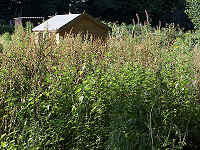
How about a traditional method to reclaim your garden. You can get a crop of potatoes and a weed free space all in one with the gardening advice on this link.Reclaiming Wild Weedy Places
|
So take a look at this page on organic alternatives to kill weeds on overgrown land.
Remember that when you kill all the weeds dead with weed killer your soil stagnates. So if you haven't time to do it all at once
i.e. remove weeds >> cultivate >> grow... ... then leave what you can't do until later or simply scythe it down to the ground and follow the advice here.
Remember, when you cant' tackle the lot, weeds left to regrow in-situ actually help to maintain good drainage, healthy soil and control pests.
There's more on power tillers / rotavators here, spades, forks, mattocks and an excellent interchangeable tool range here.
Plan Your Garden Carefully
4 Top Organic Weed Control Tips
- Be persistent - you'll win through,
- Recycle - use a compost bin ...
- Be patient - don't tackle it all at once,
-
Plan - keep garden maintenance in mind.
More on how to get it all done below...
Small Garden Weeds - Beds, Paths, Drives, Walls...
Are you looking for a quick one size fits all solution - "a no brainer"? That's not likely to be an organic weed control method but... ...But this next link describes a few quickies that you might consider to kill those established weeds in difficult spots. These are not as dangerous as chemical herbicides but rather handy.
Neat And Tidy No Weed Sub-Urban Garden
Many people in suburbs like to grow their garden as neat as any furnished room with fitted carpets. And when you lead a busy life you want organic weed control that is quick and easy.Well try using mulch. You can suppress weeds in beds, borders and around trees by applying a weed barrier or mulch - and that looks real neat.
Mulch is an additional surface layer that suppresses weeds by excluding light - the most important method of organic weed control. It's also used as an aid to plant culture. My Mulch pages start on this link - to prevent perennial weeds select sheet mulch - I detail neat fabric mulches for lawn borders, and rings for trees.
Weeds At The Garden Gate
Further information on specific weed problems and methods of Organic Weed Control.
More Information About Gardening Without Weeds:
lawn weeds,
-
annual weeds,
-
reclaiming an overgrown site,
-
flame weeders,
-
how garden weeds thrive, - intelligent weed control, - rotavators & tillers, -
natural weed prevention, - control weeds with sheet mulch, -
compare herbicides with organic weed killers, -
perennial weed control, - The Organic Gardener's Tool Shed, -
& the best in small handy weeding tools,
how garden weeds thrive, - intelligent weed control, - rotavators & tillers, -
natural weed prevention, - control weeds with sheet mulch, -
compare herbicides with organic weed killers, -
perennial weed control, - The Organic Gardener's Tool Shed, -
& the best in small handy weeding tools,
Find more information on the-organic-gardener.com:
ALSO on the-organic-gardener.com
-
Organic Lawns -
Organic Fertilizer -
Growing Potatoes -
Growing Flowers -
Grow Seeds -
Tool Shed -
Power Tools -
Garden Shredders -
Garden Compost -
Garden Gifts -
Garden Books -
Runner Beans -
Garden Mulch -
Watering -
Moving Shrubs -
Organic Weed Control -
Organic Garden Pest Control -
Gardening Diary/Blog -
About Organic -
My Neighbour's Weed Patch
Do you run a gardening website - with information to interest my visitors? To set up exchange links from/to suitable pages - click here.

Custom Search
- The Home Of The Organic Gardener - growing naturally, pure and beautiful.
^Organic Weed Control from the top.

Copyright © The Organic Gardener.Com 2004 - 2020.

[?] Subscribe To This Site


- Organic Garden Blog
- Grow More Flowers
- Grow From Seeds
- Grow Better Lawns
- Grow Potatoes
- Organic Fertilizer
- Weed Control
- Garden Tool Shed
- Garden Power Tools
- Garden Shredders
- Grow With Compost
- Gardening Gifts
- Gardening Books
- Crop Rotation
- Organic Pest Control
- Runner Beans
- Mulch It
- Garden Watering
- Moving Shrubs
- About Organic
- About the Gardener
- Organic Links
- Contact the Gardener
- Privacy Policy
 *
*