
Garden Mulch
* Protect garden soil for your growing plants,
* Keep the moisture in & you can still feed your plants,
* Cover the ground in style, with attractive organic mulch,
Garden mulch is a protective layer put on top of the soil. Its use varies from making ornamental garden paths, to weed suppression and an aid to plant culture. See links below for specific types of mulch -
Three Types Of Mulch
Protect and improve with organic mulchControl weeds with sheet-mulch
Landscape your garden with ornamental mulch
There are many types of mulch. You will select them for different purposes and use them in different ways. Many are organic such as wood chip or grass cuttings, some like polythene or gravel are not actually organic but nevertheless they’re put to good use in an organic garden. Investigate the 3 catagories above.
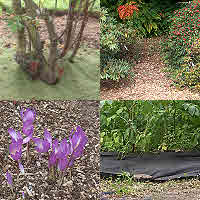

When To Mulch
Autumn is the main time for mulching. Then it retains heat in the soil over winter giving a higher starting temperature in the new season. It also protects delicate soils from the ravages of winter rains and erosion.In spring the mulch can be removed before planting and sowing and to let sunlight warm the soil. Once the new plants are established in early summer, new garden mulch can be applied to conserve soil moisture through the dry summer months.
‘No dig’ gardeners and organic gardeners of raised beds may apply mulch continuously. Here an organic mulch is breaking down over time to form good organic soil.
An important reason for adding a layer of mulch is simply to keep the soil covered and protected where no plants are growing and especially when the surface is open.
Permanent areas of bark or gravel mulch can be established around conservative features such as ornamental trees, shrubs and pathways.
How Various Garden Mulches Improve Your Organic Garden
- Attractive appearance and smell
- Suppress weeds, reduce weed seed import and germination
- Protect soil from treading and compaction - Suitable for pathways and play areas
- Protect soil from erosion and washing away due to rain pounding and runoff,
- Reduce water loss and conserve moisture in the soil during summer,
- Keep soil surface and plant roots cool in summer,
- Help retain warmth in the soil over winter for earlier spring growth ,
- Protect soft fruit e.g. strawberries, and others, from soil contact and rot ,
- Can reduce slug and snail activity,
- Organic mulches breakdown to fertilize and condition the soil ,
- Encourage earthworm activity which itself improves drainage and fertility
Problems After Incorrect Choice of Mulch or Application Method
- When loose and light they can be blown or kicked about
- Can prevent aeration, killing roots or causing them to surface and dry out
- Can introduce excess carbon into the soil causing nitrogen shortage
- Can increase acidity (reduce ph) causing problems such as nitrogen shortage
- Can result in weeds growing
- Can cause rot to develop on plants
- Some mulches have an untidy appearance
BOTTOM OF THE GARDEN HEAP - more information and links
Find more links about Garden Mulch below:
|
Flowers For
Home |
More Help On
Flower Garden Design |
Grow Your
Own Flowers |
|
|
> > |
> > > |
> > > |
> > > |
My Neighbour's Garden Mulch
The Flower Expert is here.How to make a beautiful & productive garden with Sarah Raven - click link.
The Royal Horticultural Society is on this link plus... ...
Pictures of the growing landscape for the London Olympics
Do you run a gardening website - with information to interest my visitors? To set up exchange links from/to suitable pages - click here.

- The Home Of The Organic Gardener - growing naturally, pure and beautiful.
^Get on top with Garden Mulch

Copyright © The Organic Gardener.Com 2004 - 2020.



- Organic Garden Blog
- Grow More Flowers
- Grow From Seeds
- Grow Better Lawns
- Grow Potatoes
- Organic Fertilizer
- Weed Control
- Garden Tool Shed
- Garden Power Tools
- Garden Shredders
- Grow With Compost
- Gardening Gifts
- Gardening Books
- Crop Rotation
- Organic Pest Control
- Runner Beans
- Mulch It
- Garden Watering
- Moving Shrubs
- About Organic
- About the Gardener
- Organic Links
- Contact the Gardener
- Privacy Policy