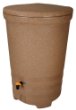
Growing & using garden Comfrey
* Grow your own fertilizer
Whenever you want a readily available fertilizer for flowers fruit and seeds then give this a try. And if you don't have enough room to grow your own patch or want to try it out first, there's the same natural ready-made fertilizers from Comfrey available lower down this page. The Secrets of Organic Comfrey Revealed
Lawrence D. Hills (1911 - 1990) who championed its use in the 1950's. You can find his expert book 'Comfrey Past, Present and Future' on this link. How Does Your Fertilizer Grow?The plant has a deep growing tap root that goes down several feet. The root draws up nutrients from subsoil, especially potassium. This is good news for organic fruit and tomato growers as there are few accessible sources of organic potassium.Because the potassium is effectively mined from deep down - an otherwise inaccesible source - the plant provides a sustainable free nutrient input that organic gardeners love. And this makes the nutritious black liquid. Rapid breakdown of leaf protein is a putrefaction so the the concentrate is very smelly. But don't let that put you off because the liqour is a good fertilizer and I have to caution organic gardeners not to over use. Remember that the leaves are also well-used used as mulch, and to activate garden compost - more information below with links to Comfrey ready-made stuff. Which Plants to UseChoosing the right type of plant is quite important and it starts with Russian Comfrey Symphytum uplandicum. Bocking in Essex U.K. - site of the Henry Doubleday Association trials - has given its name to a number of cultivars, and Bocking14 is the one that's specially grown for organic gardening today.The advantage of Bocking14 is that it doesn't make viable seeds. Plants from the wild can become an invasive weed so it's probably best to avoid sowing those seeds. Some gardeners however, grow (ornamental) Comfreys because of there attractive blue flowers and attraction for bees. Bocking14 plants are easily propagated from offsets and root cuttings, and this is how Bocking14 is normally supplied. This form stays put once planted. More below on how to grow it - the seeds and plants are here. Choosing a SiteRemember that Comfrey usually becomes a permanent feature like a lawn or tree. I plan to grow a new patch next to and within a developing mixed hedge. Semi-shade is not a problem but a dry site limits growth (more below on mulching). A permanent compost making area may offer the best site for your comfrey patch. This is convenient for cutting some leaves into the heap or making into potting compost - described below. Plants grown next to compost bins benefit from nutrients that may leach from the compost during rain etc... And if you store fresh manure here the Comfrey will do well. 5 ways to benefit your garden
Comfrey Store - with accessories
Growing, Maintaining, and Cutting
The plants readily grow from root cuttings or offsets. You'll need to supply nitrogen to make your plants grow well.
A well-grown plant can eventually produce 4 to 5 lbs of leaves per cut and 4 to 8 plants may be adequate for a small to medium sized garden say 15yds X 30 yds. 2 ways to make fertilizer1 - Concentrated Liquid: Most conveniently made on the small-scale by capping a piece of odd drainage pipe at both ends and providing a spout at the bottom. Simply hang up a metre length with a collecting bottle slung beneath. I use an opaque bottle. A collector can also be made from a piece of capped pipe and poured into a screw top bottle.Then stuff the pipe with fresh cut leaves and you'll soon have rich liquid fertilzer dripping out of the bottom. Alternatively.... Use a 5+ gallon drum with a lid and a tap at the very bottom with leaves from 6 or more plants, - or for the easiest - Cram a large old watering can with comfrey leaves. Then wrap the whole in a black plastic bag to keep insects and rain out. As the minimum recommended size is 5 gallons, you'll need to top up your watering can with more and more leaves. When the liquid accumulates you can gently pour it into another watering can to dilute. Adding a watering can rose end helps filter out remaining solids. This is the best way for most smaller gardens and to conveniently store the concentrate over winter in a dark place. Concentrate needs to be diluted 1 part to 10 or 20 parts water. Some gardeners advise that made like this it doesn't smell, but I found it does, at least when fresh.
- Nutrient supply & demand...
Results published by Henry Doubleday Research Associationref1 show that
Concentrated Liquid Comfrey contains: Nitrogen 80 mg/l Phosphate 26 mg/l Potash 205 mg/l Therefore: 4 Litres of concentrated liquid Comfrey - plus 15 g of chicken manure pellets - dissolved in 6 Litres water - then diluted to make 40 litres contains:- 23 mg/l Nitrogen + 12 mg/l Phosphate + 29 mg/l Potash. My calculation based on dataref2 suggests that each tomato plant requires (assuming total uptake is spread evenly over time): 259 mg Nitrogen 24 mg Phosphate and 306 mg Potash Per Week . In fact the rate of uptake doubles going from 45 to 60 days after transplanting. This is when Comfrey liquid fertilizer is used - but with care. My upcoming page on growing tomatoes will detail how to use this with comfrey leaf mould. 2 - Comfrey Liquid: is dilute and ready to use. I haven't used this method yet, so perhaps the truth is it smells even more than mine... that must be good? :-) ooooowoooow!!
Find what you need for the job here
How To Use The Liquid FertilizerDefinitely with caution. As liquid feed it provides readily available nutrients that could upset the natural balance.It's my understanding for example, that while comfrey leaf mould is mainly nitrate nitrogen, comfrey liquid will contain large amounts of ammonium nitrogen. Ammonium can have the effect of blocking uptake of other nutrients like potassium and calcium. Comfrey leaves and comfrey liquid may not suite acid loving plants. The big plus is that you get readily available potash for free. This is especially valuable for tomato fruit growing where you might otherwise rely on inorganic sources. You'll be able to read more about using liquid comfrey, liquid seaweed, and liquid manure making liquid fertilizers and growing tomatoes on upcoming pages at the-organic-gardener.com. Why not bookmark the-organic-gardener.com, and for the latest organic gardening information and gardening offers submit the form below to recieve my ezine. Removing Comfrey PlantsThese plants have deep roots from which they can readily regenerate. Removal of established plants requires deep digging to remove as much of the root as possible. Check the method on this link.Some gardeners advise doing the job in dry weather so as to wilt the plant. However, damp conditions may be better as they allow you to dig deeper and to more easily extract whole plant roots.
The Are Many Organic Fertilizers
My Neighbour's Garden PlotThanks to the Garden Organic booklet - by Jill Shnabel.I have learned from the organic gardeners at Garden Organic who deserve much of the credit as poineers of these methods. Thanks to D.M. Hedge and the Food & Fertilizer Technology Center for publishing a review of the data on nutrient requirements of Solanaceous crops. 


|

 by Lawrence D. Hills.


 Lawrence D. Hills.